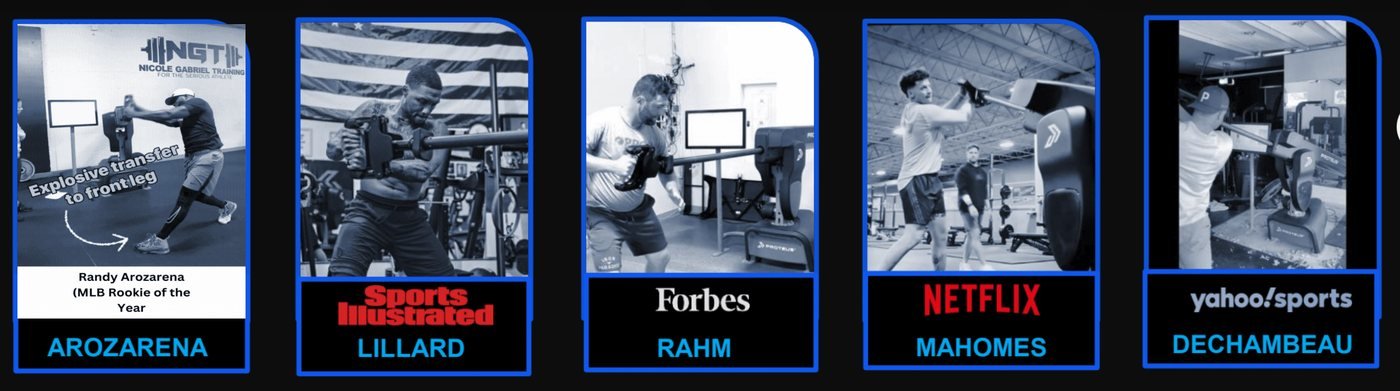
It started at the top. The best athletes and trainers on the planet adopted it, organically. Mahomes, Lillard, Rahm, Arozarena, DeChambeau.
Your throwing or hitting speed comes from two things: your skill, and your body's power. Coaches work on skill every day. Nobody measures the power. Proteus does. Four movements, about five minutes, and a two-page report that says whether your body can support the velocity you're throwing or hitting at, and which part of your body to train.
It started at the top. The best athletes and trainers on the planet adopted it, organically. Mahomes, Lillard, Rahm, Arozarena, DeChambeau.
Proteus is a machine that holds resistance steady in every direction while you move, and measures how fast you move it. It shows exactly where you're strong, where you're limited, and what to do about it. The test takes about five minutes, and you see your results immediately.
Throwing and hitting are rotational and three-dimensional. Dumbbells and cables resist in one direction, so the moment an athlete rotates, the resistance stops opposing the movement and measurement breaks. Proteus applies a constant magnetic resistance that opposes movement in any direction and measures velocity: power through the actual movement patterns of the throw and the swing.
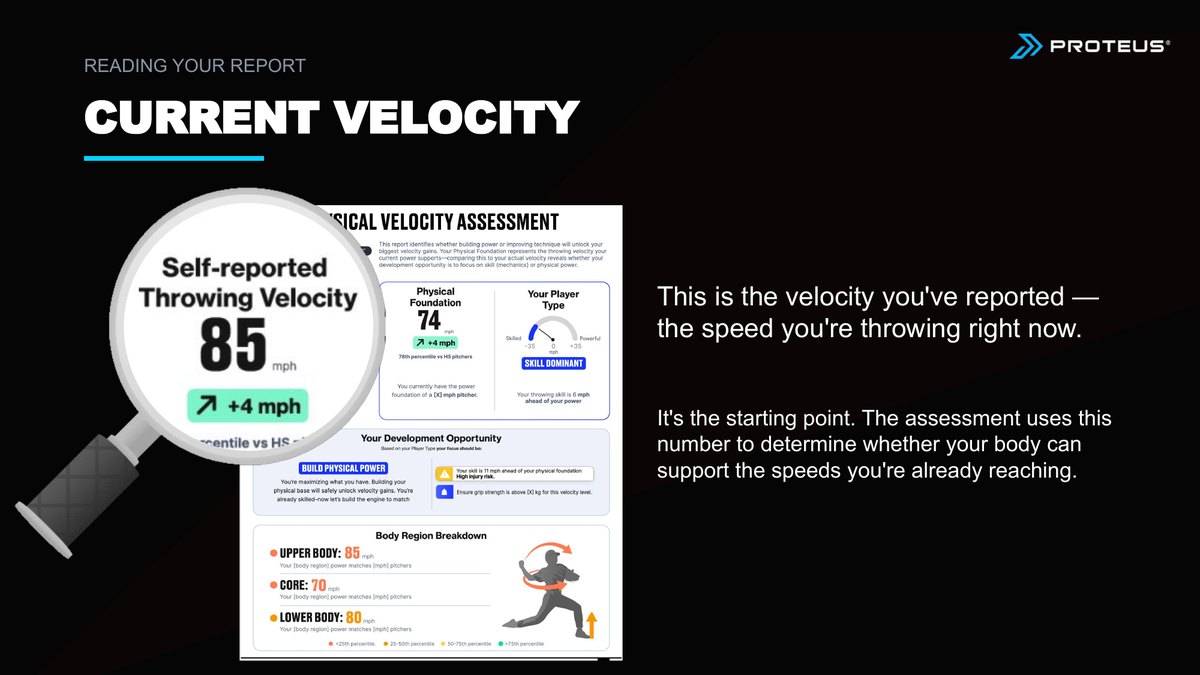
Proteus measures power across four explosive movements and turns it into one number: the velocity that power supports. Compare it to the velocity you actually throw or hit at. The difference is what matters.
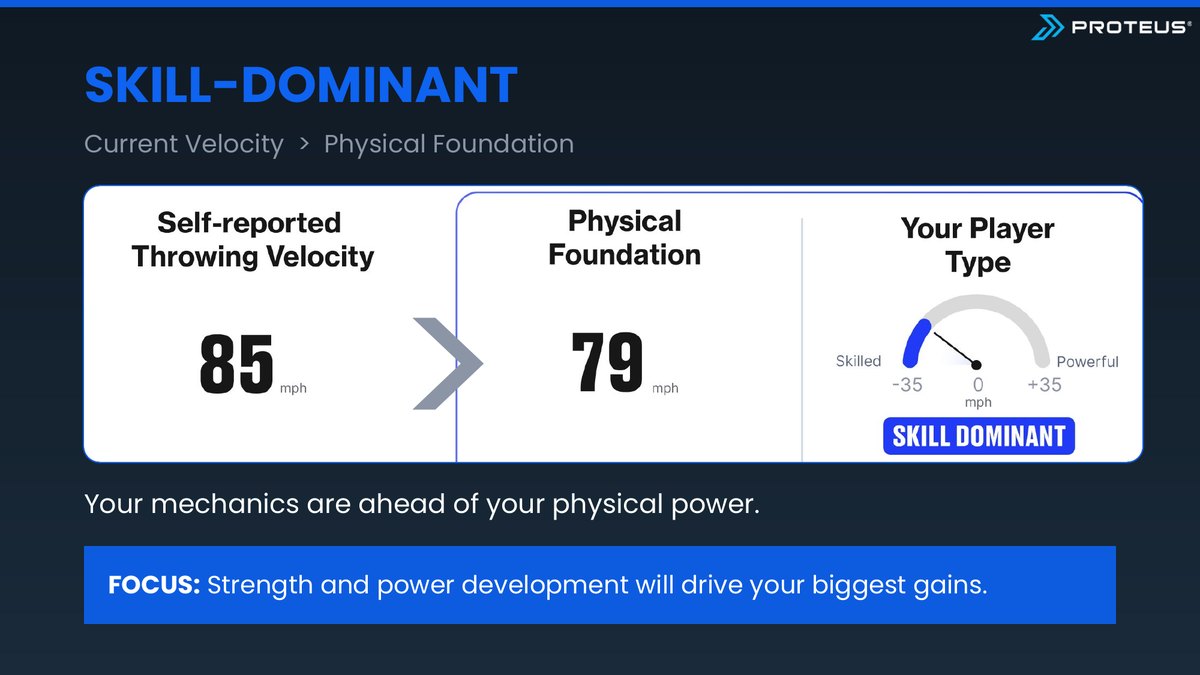
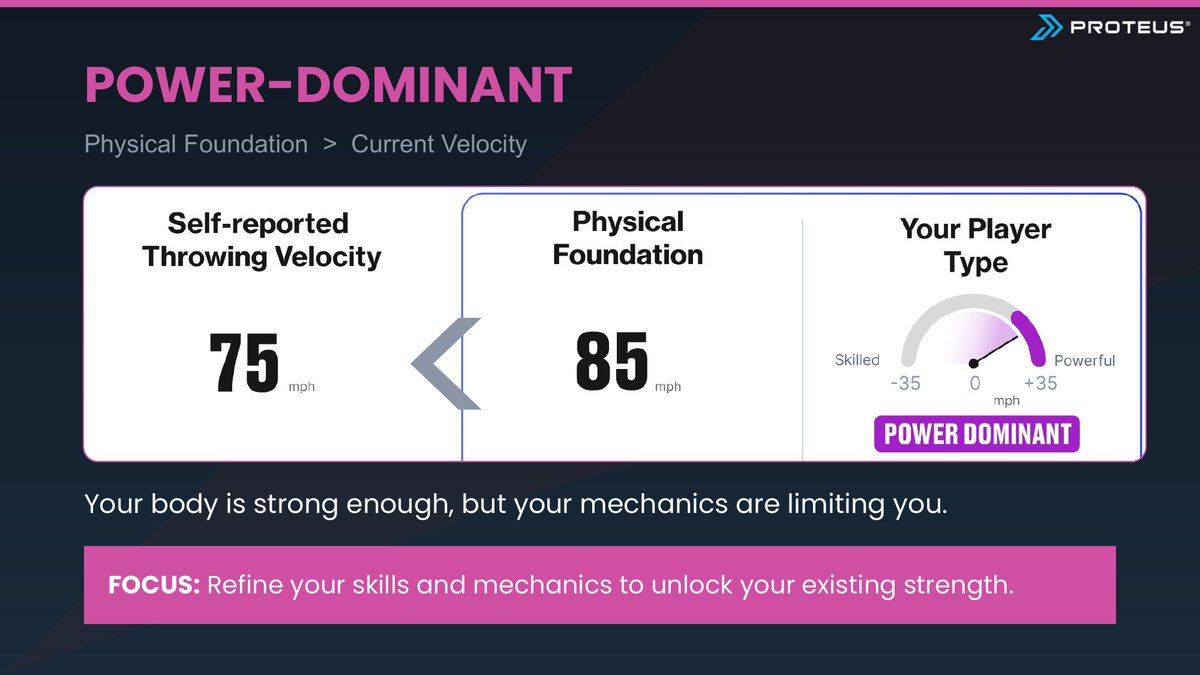
More lessons won't move your number. Your next gain is physical.
You're leaving velocity on the table. Your next gain is mechanics.
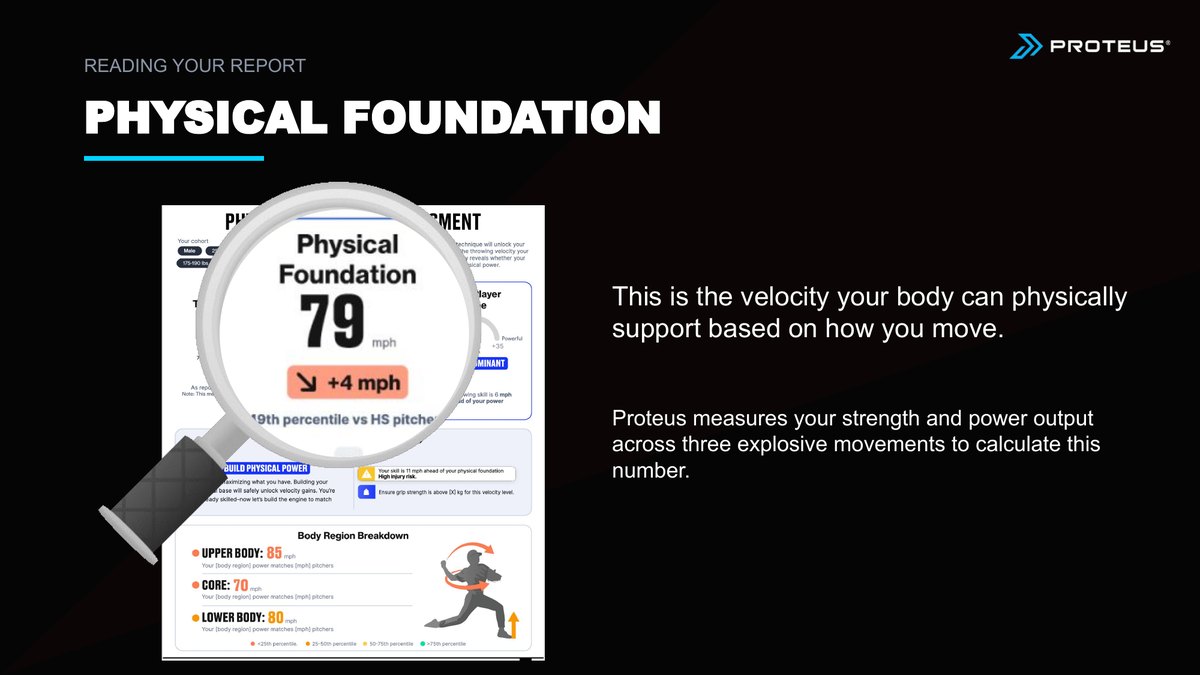
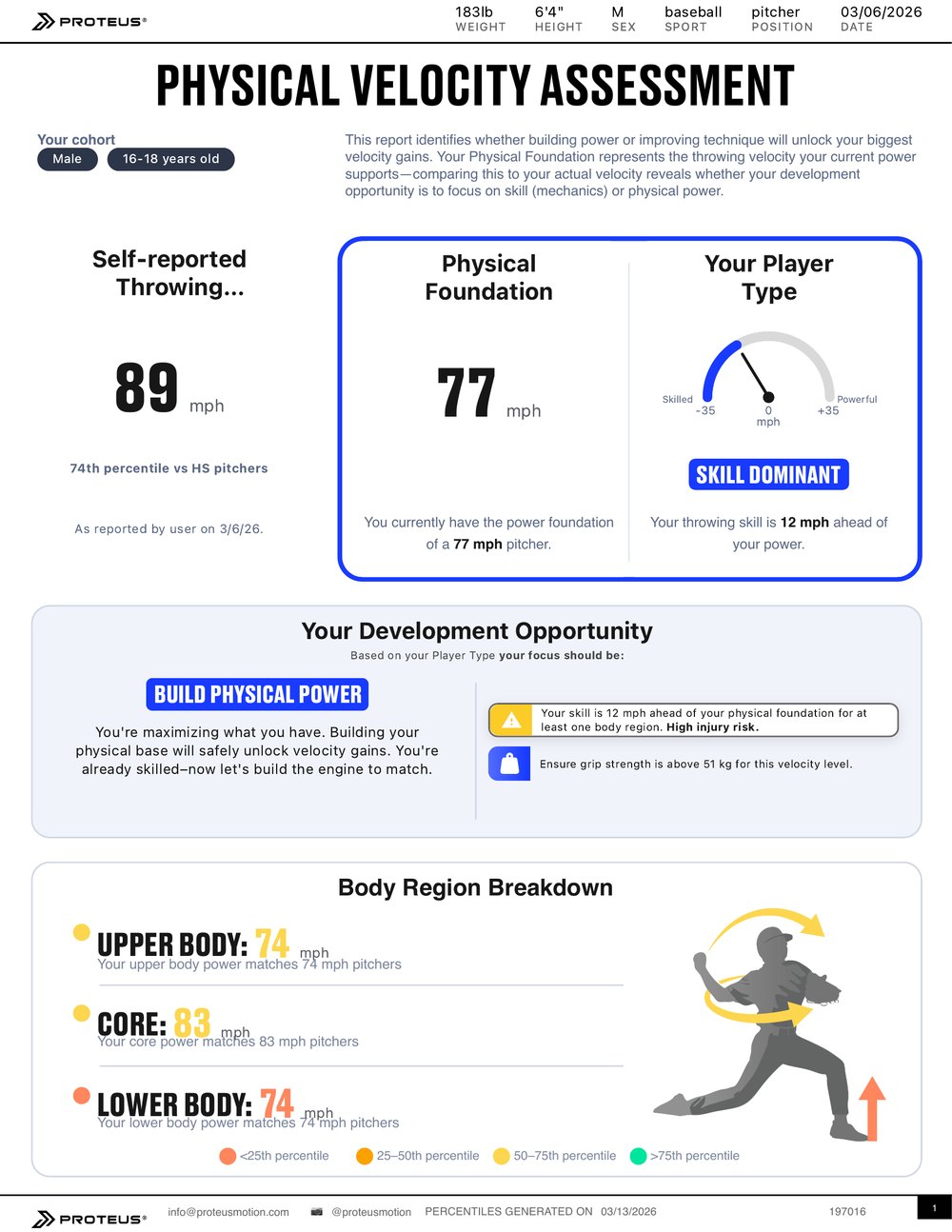
What's limiting throwing velocity, by body region: upper body (the diagonal throwing pattern), core (shot put), lower body (vertical jump). Page 2 gives each region's power, the percentile, and the watt target.
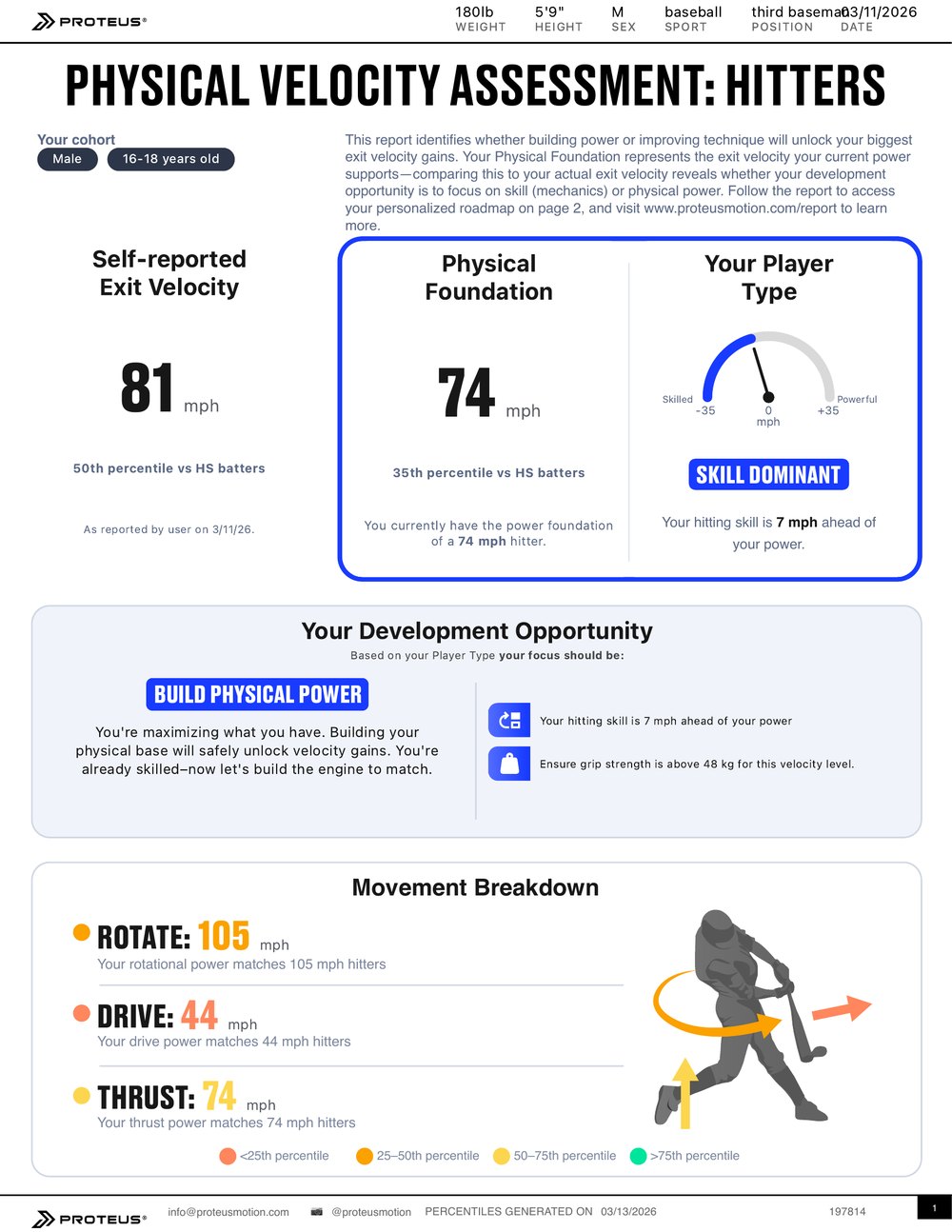
The physical foundation behind exit velocity, by zone: rotate (trunk rotation), drive (shot put), thrust (vertical jump). Same two-page format, same program behind it.
Sample reports. Not a player's result.
Players were tested on Proteus and on TrackMan the same day. These were the movements that predicted throwing and exit velocity. The 1D movements did not.
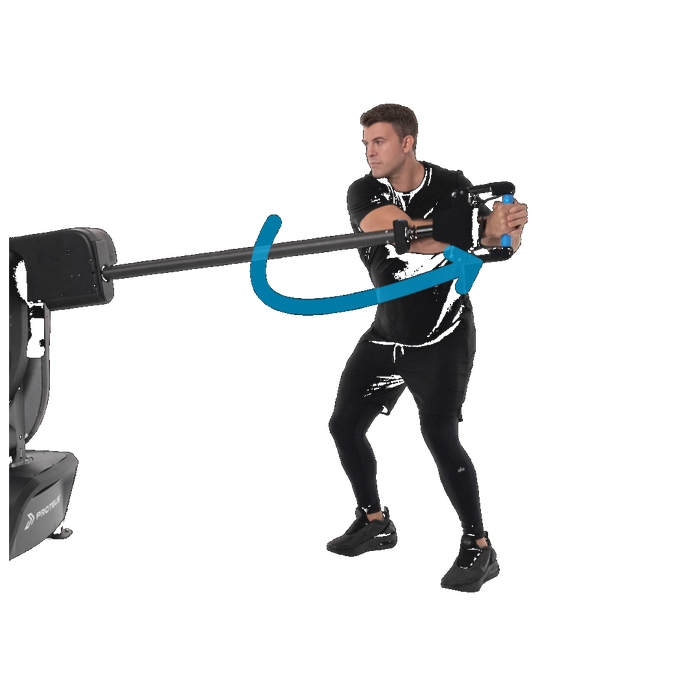
Straight-arm trunk rotation. Rotational core power.
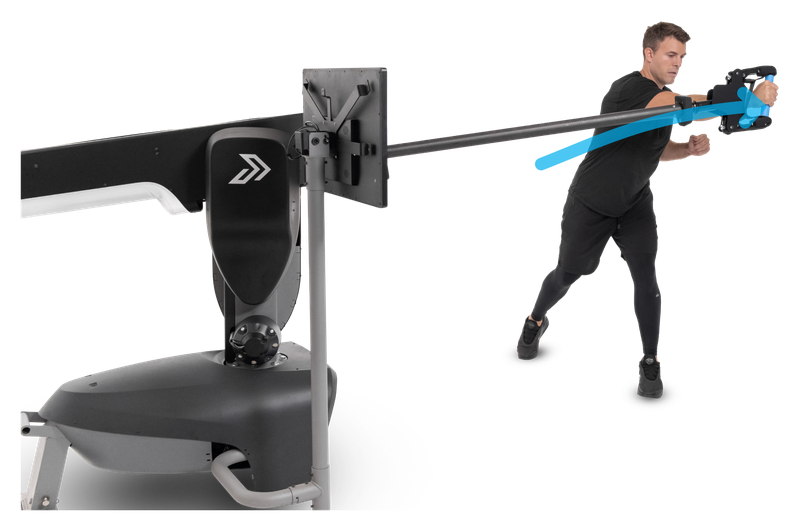
Power delivery through the core and upper body. Dominant side.
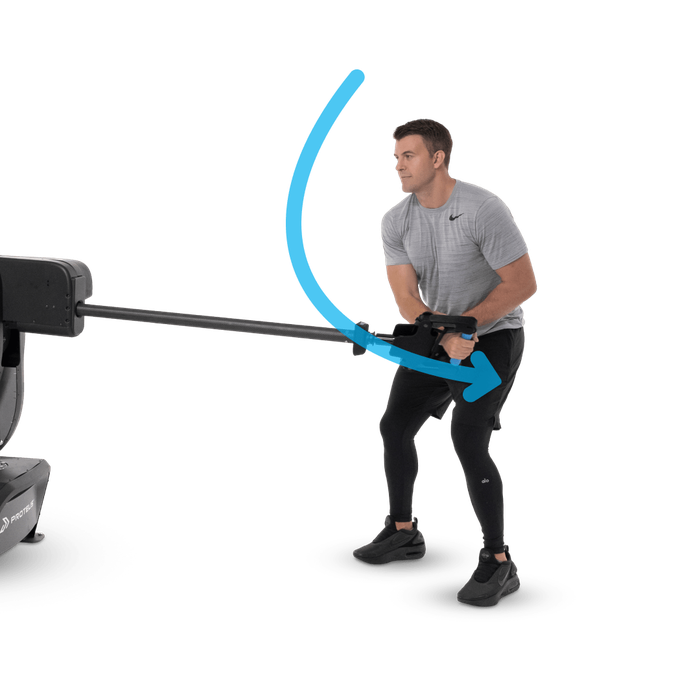
PNF D2 extension. Arm speed through the throwing plane. Dominant side.
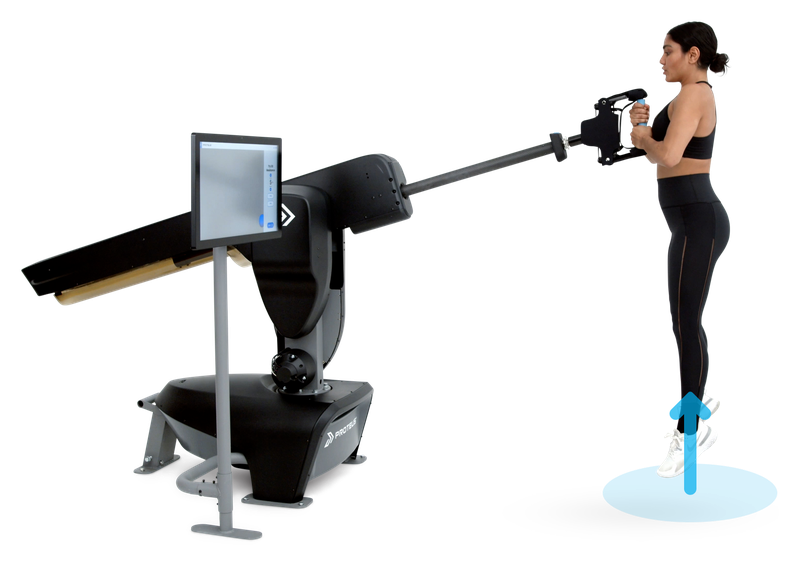
Lower-body power. Bilateral.
The baseball protocol was built with Cressey Sports Performance. Same-day Proteus and TrackMan analysis by the University of the Pacific, with Eric Cressey.
The baseball test was built with Cressey Sports Performance in 2021 as a 17-movement assessment, because nobody knew yet which movements mattered. It has been run about 20,000 times since. Players were tested on Proteus and on TrackMan the same day, and the University of the Pacific, working with Eric Cressey, matched each movement's power to how hard the player threw and how fast the ball left the bat. The straight-line presses and rows did not predict velocity. The explosive, rotational movements did. Those four are the test.
| Movement | Metric | Correlation |
|---|---|---|
| Vertical jump | Acceleration | r = 0.67 |
| Diagonal throwing pattern (D2 extension) | Power · Acceleration | r = 0.62 · 0.59 |
| Shot put | Acceleration · Power | r = 0.48 · 0.43 |
| Trunk rotation | Acceleration | r = 0.42 |
28 professional pitchers. Proteus tested in the 2022–23 offseason; top in-game velocity from the following season (Baseball Savant). Proteus analysis, May 2024. 8 of 34 movement-metric pairs correlated above 0.4; the presses, rows, and curls did not.
| Movement | Metric | Correlation |
|---|---|---|
| Shot put | Power | r = 0.78 |
| Trunk rotation | Acceleration | r = 0.73 |
| Vertical jump | Power | r = 0.67 |
129 players, average age 15.5, tested on Proteus and TrackMan at Train PMT, January 2023. Proteus analysis. From the same data: +50 W of shot put power, +12.5 W of vertical jump power, or +3.57 m/s² of trunk rotation acceleration each matched about +1 mph of exit velocity.
Correlations are Pearson r. Individual results vary; the report uses the player's own numbers, not these averages.
Every test ends with a prescription: an eight-week program built from your own results.
A coach runs it with on-screen guidance. On retest, the change is on the chart against your baseline.
Your velocity, your Physical Foundation, your player type, and which part of your body to train.
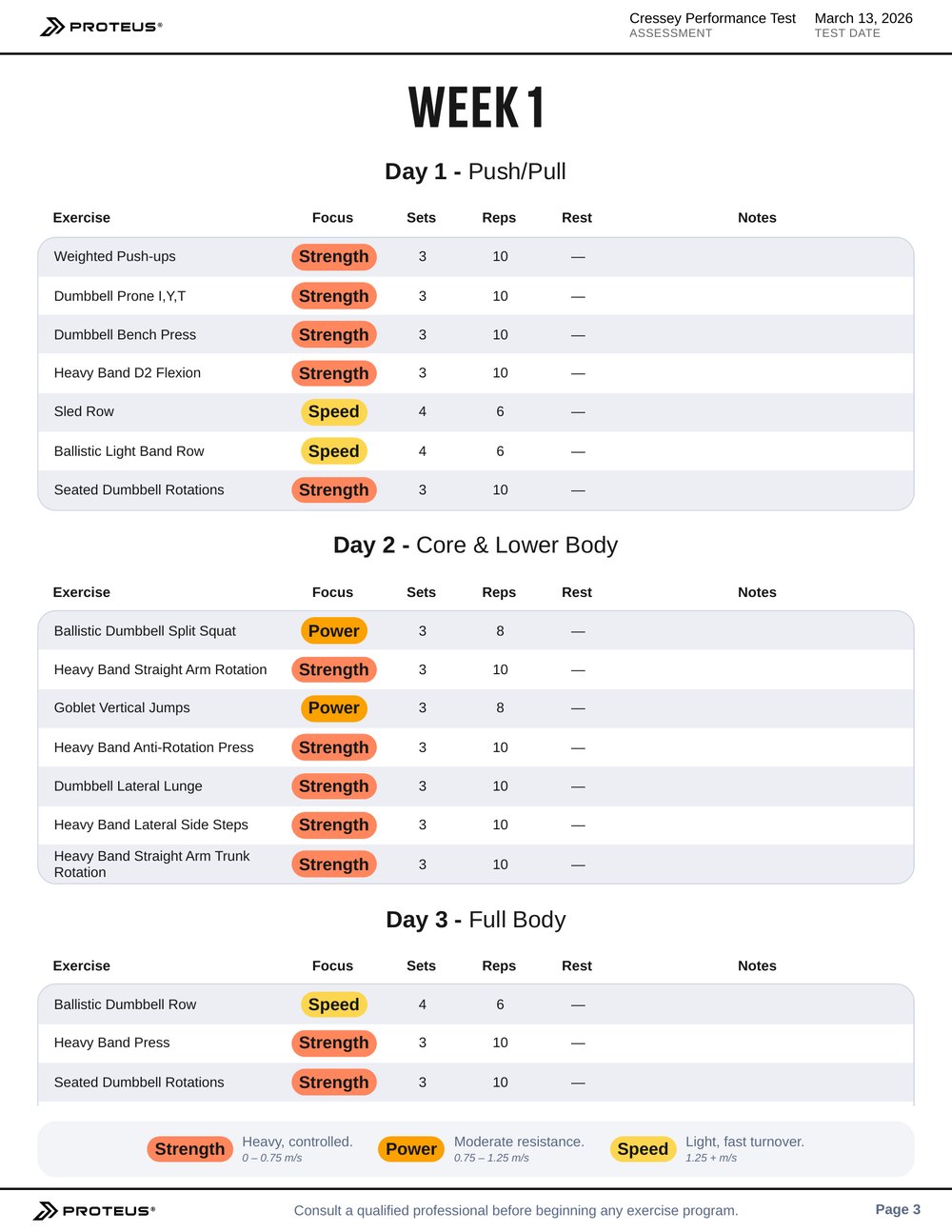
Generated from the report. In the cage, in the weight room, or at home.
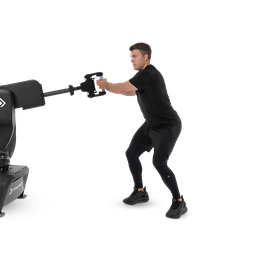
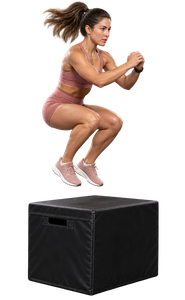
Every test movement is also the exercise. Retest before the season.
Ninth Inning Baseball, 2026. Fifty-one high-school pitchers, tested on Proteus and TrackMan before and after.
Every pitcher's TrackMan velocity went up after 60 days.
Up to +12 mph. Throwing was maintenance only.
Built from each pitcher's report, on the facility's own equipment.
On Proteus to date.
For players and parents. Share it before test day.
Eric Cressey, VP of Player Health, New York Yankees.
What the machine is and who uses it.
It sits next to them. TrackMan measures the ball. Proteus measures the player: the power the body produces in the four movements that predicted throwing and exit velocity. The report tells you whether to work on skill or on power; the cage shows the result.
Different. Resistance from every direction, full-body stabilization. Feeling off-balance on the first rep is normal, and exactly why it works. One slow practice rep first, then max effort.
Ages 13 and up without paperwork. Players under 13 need a signed parental consent form. Everyone takes the same four-movement test. Three movements make the pitcher report, three make the hitter report, and you get both.
You get the two-page report before you leave. Then an eight-week program built from your results, run in the cage, the weight room, or at home. Train it, retest, and the change is on the chart.
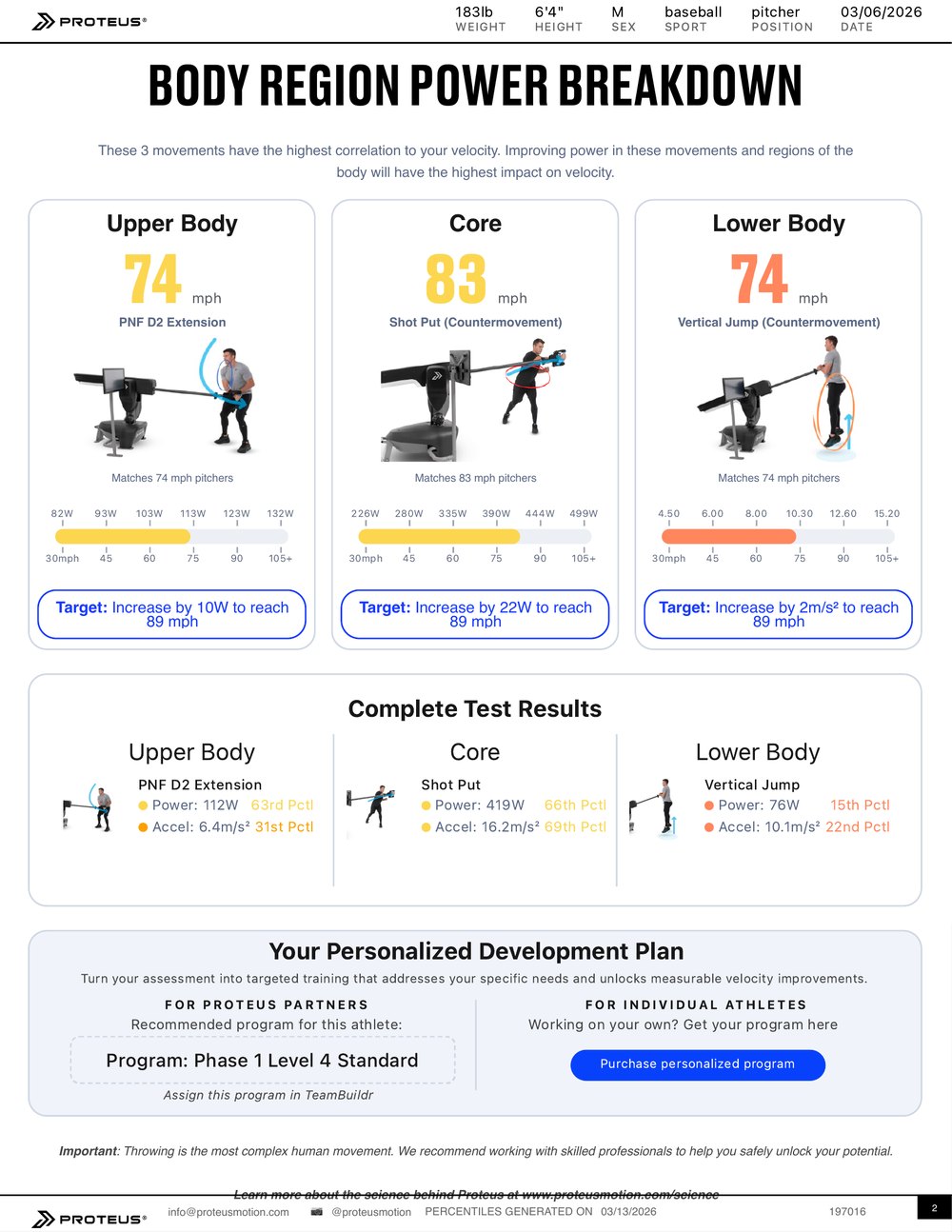
Tested at your Curve club? Leave your name and we'll send your report and the program details. Coaches and club owners: ask for the Curve terms on the next page.
Sam Miller, Founder · sam@proteusmotion.com · (781) 910-7489